
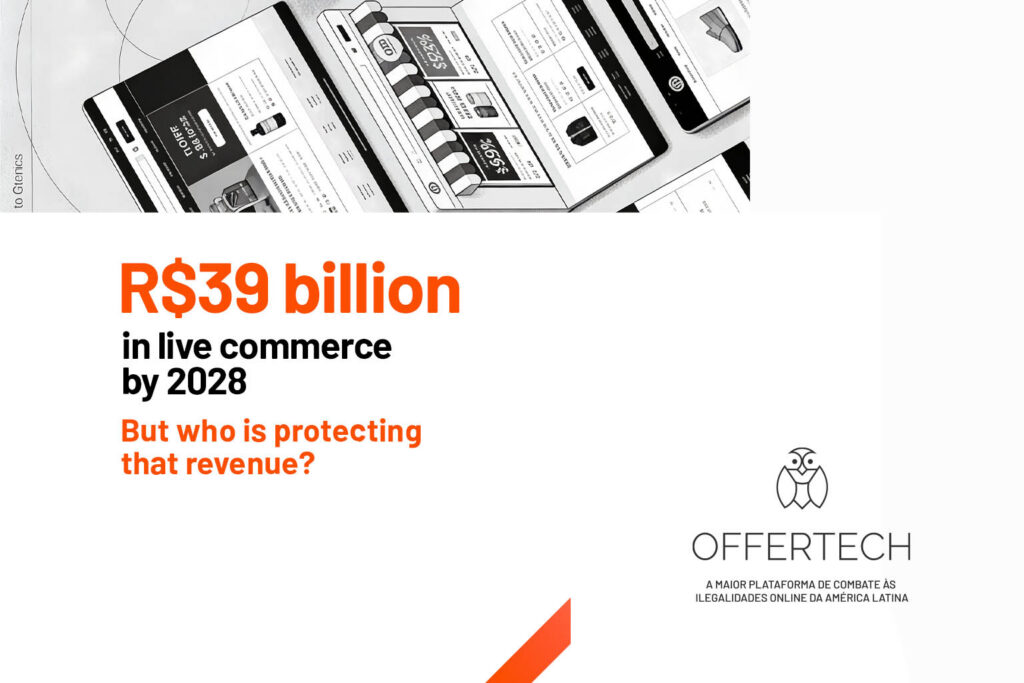
With the rise of live commerce, social commerce, creator-led sales and shopping integrations across platforms such as TikTok Shop, Instagram, YouTube and marketplaces, sales now happen inside content. Consumers discover, trust, click and buy in the same environment where they are being influenced.
Online Brand Protection: Why Live Commerce Growth Requires a New Layer of Brand Protection
Live commerce is no longer a trend. It has become a new sales infrastructure.
For years, e-commerce was treated as a relatively predictable digital channel. Brands sold through their own websites, marketplaces, paid media, search and social platforms. The consumer journey was fragmented, but easier to map.
That reality has changed.
With the rise of live commerce, social commerce, creator-led sales and shopping integrations across platforms such as TikTok Shop, Instagram, YouTube and marketplaces, sales now happen inside content. Consumers discover, trust, click and buy in the same environment where they are being influenced.
This creates a massive growth opportunity for brands.
But it also creates a new surface for risk.
When conversion happens in real time, fraud also moves in real time.
Market projections indicate that TikTok Shop could generate R$39 billion in Brazil by 2028, while Brazilian e-commerce is expected to reach approximately R$258 billion in 2026. This is a billion-dollar market, increasingly social, fast-moving and conversion-driven.
But there is one question many brands are not asking deeply enough:
Who is protecting this revenue while it is being generated?
The new risk is not only in marketplaces. It is inside content.
Digital piracy has changed territory.
For a long time, online piracy and brand abuse were mainly associated with marketplaces, suspicious stores, isolated links and fake web pages. These channels still matter, but the problem has become much more complex.
Today, illicit activity moves through attention environments:
- live selling streams;
- short videos;
- fake social media profiles;
- illegal paid ads;
- cloned landing pages;
- links in bio;
- private groups;
- unauthorized creators;
- fake checkout websites;
- content designed to simulate legitimate offers.
In practice, a consumer can discover a counterfeit product during a live stream, click a fraudulent link, land on a fake website and believe they are buying from a legitimate brand.
This is the new challenge of online brand protection.
It is no longer enough to remove an illegal ad after the damage has already happened. Brands need to detect risk before, during and after conversion.
Online brand protection is now revenue protection
The term online brand protection is often associated with legal enforcement or isolated takedown actions. But in today’s market, it must be understood as a business strategy.
Protecting a brand online means protecting:
- reputation;
- traffic;
- revenue;
- media investment;
- consumer trust;
- conversion efficiency;
- official sales channels;
- competitive positioning.
When a fake profile uses a brand’s name, it is not only copying an identity. It is capturing trust.
When an illegal ad appears at the moment a consumer is searching for an original product, it is not only competing for a click. It is intercepting demand.
When an unauthorized live stream sells counterfeit products using a recognized brand, it is not only violating intellectual property. It is monetizing someone else’s reputation.
That is the difference between treating brand protection as an operational issue and understanding online brand protection as digital revenue protection.
The higher the conversion, the larger the surface for exploitation
The growth of live commerce is a major opportunity for retail and consumer brands. But it is also a warning sign.
In live shopping environments, attention is concentrated, decisions are fast and urgency is high. That makes the journey more efficient for legitimate brands, but also more attractive for illicit operations.
The logic is simple: where there is qualified traffic, there will be attempts to capture it.
This can happen in several ways.
Digital piracy
Counterfeit or unauthorized products begin to circulate in high-conversion environments, often using images, product names, descriptions and visual elements associated with the legitimate brand.
Fake profiles
Fraudulent accounts imitate official channels, representatives, distributors or authorized resellers to create credibility and mislead consumers.
Fake websites and phishing
Fraudulent URLs replicate pages, checkouts, promotions and campaigns to capture consumer data, payments or traffic.
Illegal ads
Sponsored campaigns may improperly use brand names, product visuals and commercial terms to intercept demand at the moment of purchase intent.
Unauthorized live streams
Illegal live shopping streams can scale quickly, generate sales within minutes and disappear before a brand can respond manually.
That is why digital brand protection needs to operate with speed, intelligence and scale.
Brands do not only lose sales. They lose control of the narrative.
When illicit digital activity uses a recognized brand, the impact goes far beyond the counterfeit product.
The damage can affect multiple layers of the business:
- consumers buy believing they are dealing with an official channel;
- customer service receives complaints about purchases the company never made;
- legitimate campaigns lose efficiency because illegal ads capture traffic;
- CAC increases because part of the demand is diverted;
- brand perception is damaged by low-quality or fraudulent products;
- business partners question the company’s ability to control its digital presence;
- official channels lose authority to fake profiles and cloned websites.
This is the critical point: a brand may be investing in paid media, creators, content and performance while third parties use that same reputation to capture sales illegally.
In the new digital retail environment, brand protection is not only defense. It is governance of online presence.
The role of technology in online brand protection
The volume of data, formats and channels has made manual monitoring insufficient.
A modern online brand protection operation requires technology, intelligence and specialized human analysis working together.
This includes:
- continuous monitoring of social media, marketplaces, websites and URLs;
- detection of brand misuse patterns;
- risk classification;
- impact-based prioritization;
- removal of illicit content;
- recurrence tracking;
- evidence documentation;
- channel behavior analysis;
- intelligence to support legal, commercial, marketing and performance decisions.
The strategic shift is moving from isolated reaction to continuous detection, enforcement and intelligence.
This is where brand protection connects directly to growth.
A brand that understands where it is being used, by whom, across which channels and with what impact can act with greater precision. It protects revenue, reduces exposure and increases control over its digital ecosystem.
Offertech: online brand protection for a market that moves in real time
Offertech operates against online illegalities with a focus on brand protection, digital piracy, fake profiles, fake websites, phishing, illegal ads and unauthorized use of brands across digital environments.
The growth of social commerce, marketplaces and social media as direct sales channels has expanded the challenge for companies across industries.
Illicit activity is no longer limited to static pages. It now circulates through content, ads, profiles, live streams and increasingly integrated purchase journeys.
That means the response must also evolve.
Offertech combines technology, artificial intelligence, specialized operations and continuous monitoring to identify, classify and remove digital threats with scale and speed.
The company has already surpassed 14 million online illegalities removed, with more than 8 million removals across social media. This number reflects not only the size of the problem, but also the level of response required to protect brands in a complex and fast-moving digital environment.
More than removing content, Offertech helps companies understand where they are exposed, which channels concentrate the highest risk and how to turn brand protection into a strategic layer of revenue protection.
Brand protection needs to be on the C-level agenda
For years, brand protection was often concentrated within legal, compliance or intellectual property teams. These areas remain essential, but the issue now extends far beyond legal enforcement.
Digital risk affects marketing, performance, sales, reputation, customer service, commercial channels and consumer relationships.
That is why online brand protection should be part of the agenda for:
- C-level leadership;
- legal teams;
- marketing;
- e-commerce;
- performance media;
- trade marketing;
- digital security;
- distribution channels;
- marketplace operations.
When a brand is misused online, the impact is not only legal. It is commercial.
And when illicit activity grows inside conversion channels, the problem becomes directly connected to revenue.
The future of brand protection will be real time
The rise of live commerce points to a clear direction: digital sales will become increasingly integrated with content.
This means brands will need to protect not only their domains, marketplaces and official channels, but also the entire ecosystem where their reputation can be used to generate conversion.
The next phase of brand protection will be less reactive and more intelligence-driven. Less focused on isolated cases and more connected to continuous risk visibility. Less centered only on takedowns and more aligned with revenue, reputation and trust protection.
The billion-dollar market of social commerce creates a massive opportunity.
But this opportunity is only sustainable when brands can protect the value they have built.
Do you know where your brand is being used today?
Fake profiles, illegal ads, counterfeit products, fake websites and fraudulent URLs may already be using your brand to capture traffic, revenue and consumer trust.
Offertech provides digital risk assessments to identify where your brand is exposed online and which threats require immediate action.
Request a digital risk assessment and understand how to strengthen your online brand protection strategy.
FAQ
What is online brand protection?
Online brand protection is the set of strategies, technologies and actions used to protect a brand in the digital environment. It includes monitoring, identifying and removing digital piracy, fake profiles, fake websites, phishing, illegal ads and other forms of brand misuse.
Why is brand protection important in live commerce?
Because live commerce concentrates attention, influence and purchase decisions in real time. This environment can also be exploited by fake profiles, counterfeit products, fraudulent links and unauthorized live streams that capture revenue and damage brand reputation.
What is the difference between brand protection and anti-piracy?
Anti-piracy is one part of brand protection. Brand protection is broader and also includes fake profiles, fake websites, phishing, illegal ads, traffic diversion, reputation protection and intelligence about digital risk.
How can I know if my brand is being misused online?
The most effective way is to run a digital risk assessment across social media, marketplaces, search engines, ads, websites, URLs and channels where the brand may be used without authorization.
Does Offertech remove illegal content?
Yes. Offertech identifies, classifies and removes online illegalities, including digital piracy, fake profiles, fake websites, illegal ads, phishing and other forms of brand misuse.